KORVAA
Bacterial Nanocellulose & Bio-Based Performance Footwear Uppers
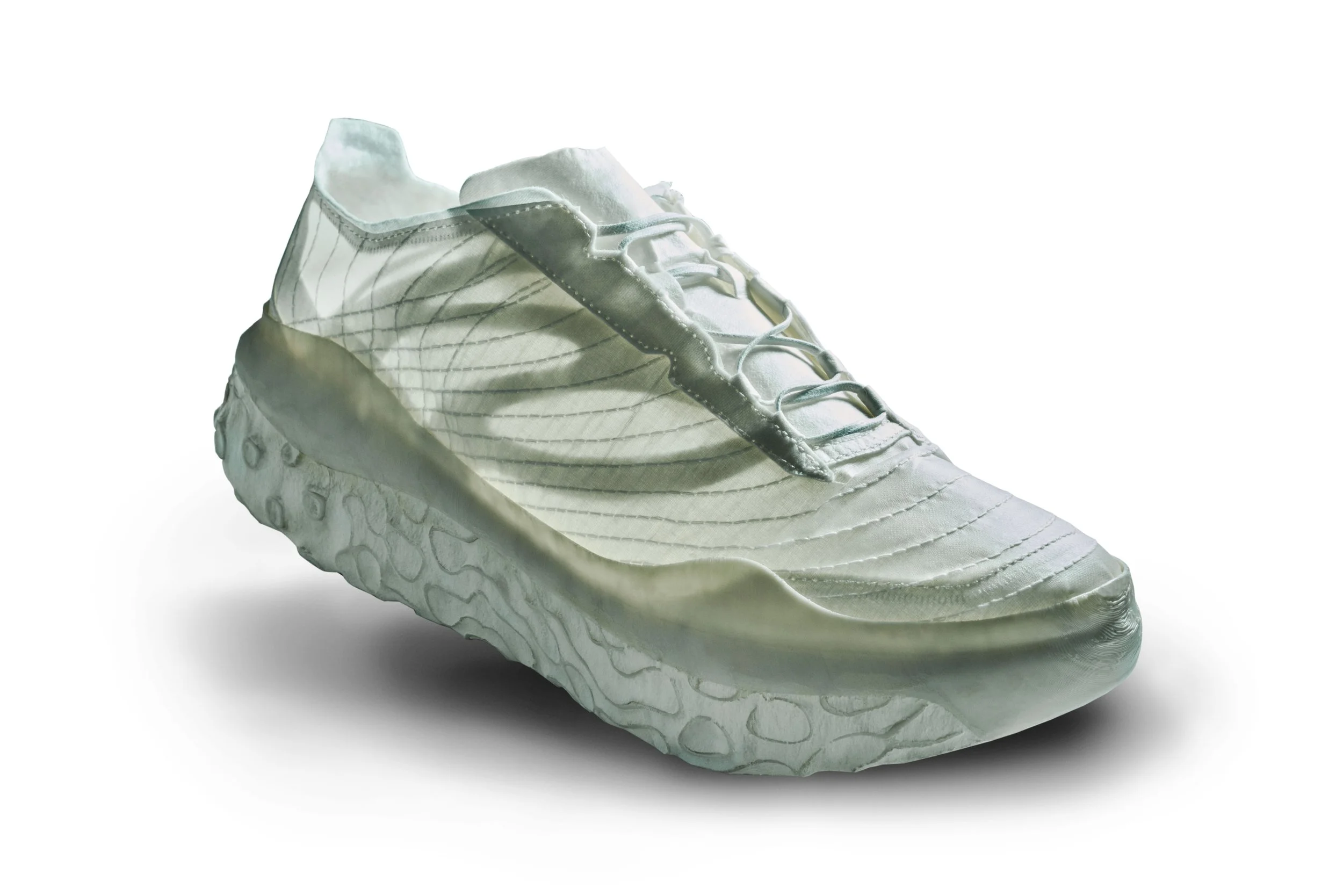
During my time as Lead Material Designer on the Korvaa project, I led the material integration strategy for a pioneering Next-gen upper at Modern Synthesis.
Companies in the Korvaa Consortium:
Ecovative, Modern Synthesis, Ourobio, and Photino Science Communications
Nature doesn’t maximise – it optimises. Inspired by this principle, the Korvaa Consortium set out to design one of fashion’s most complex products – the running shoe – the way that nature might.
Traditional footwear uses 30+ material components, with undesirable impacts at every stage: from petrochemical origins through to harmful chemicals, dyes, adhesives, and performance finishes.
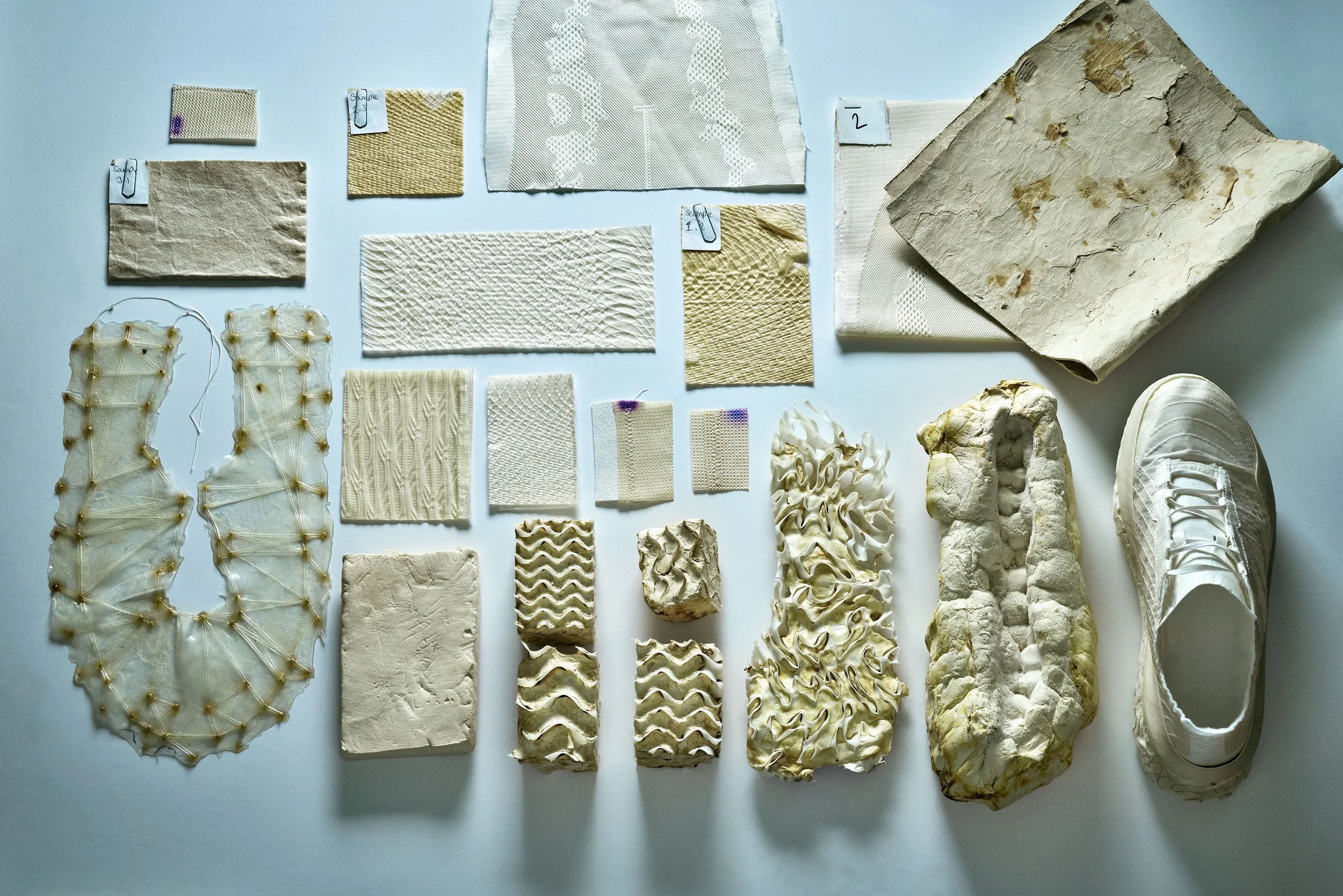
By beautiful contrast, this world-first concept shoe uses just five biologically-derived material inputs: mycelium, bacterial nanocellulose, polyhydroxyalkanoates (PHAs), cotton, and lyocell. Each material was selected for its specialised function, and developed by leading biomaterial companies commercialising these technologies.
The shoe upper was made by Modern Synthesis from nanocellulose – an extremely strong natural compound produced by microbes – combined with a 100% cotton substrate.
The midsole was 3D-printed by Ourobio using PHAs – bio-based, biodegradable polyesters that offer structure without petro-derived plastics.
The sole was made by Ecovative from mycelium, the root-like system of fungi, which is grown directly through the PHA scaffold to form a structured base unit.
The shoe was constructed using traditional string-lasting techniques, finished with laces and support linings made of cotton and lyocell.
The collaboration was documented by Photino Science Communications, a Finnish science communication company. Their full-length documentary, “Planet of the Microbes”, follows the journey from lab to artefact. The film is slated to premiere at an international festival later this year.
The Korvaa shoe offers a blueprint for rethinking complexity through collaboration. It’s a step beyond sustainability, signalling a new production paradigm where science, design and manufacturing converge to solve material challenges with nature’s elegance and efficiency.